Imagination was given to man to compensate him for what he is not, and a sense of humor was provided to console him for what he is. - Oscar Wilde
![]()
Top Posts
Recent Posts
Favorite Animators
Categories
Archives
Join 137 other subscribers
Animation, Art, and Other Shiny Things
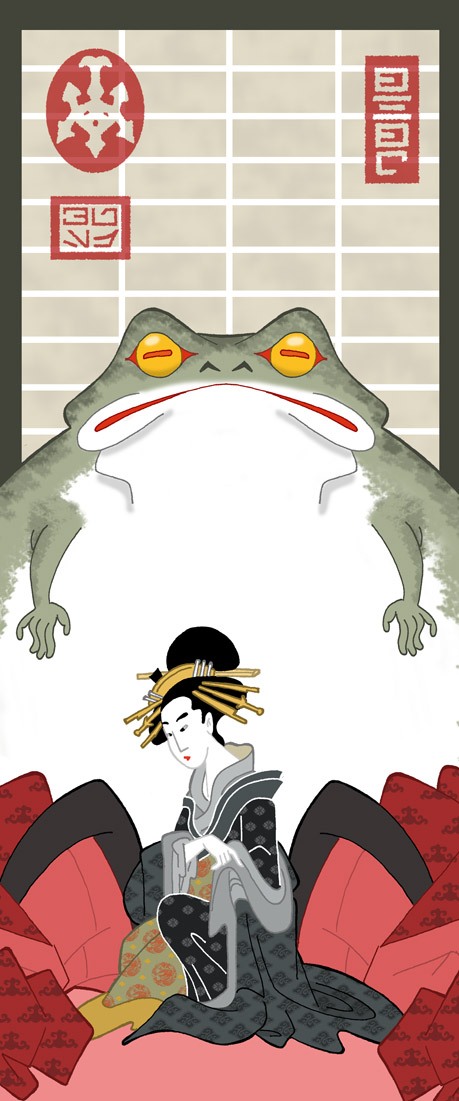
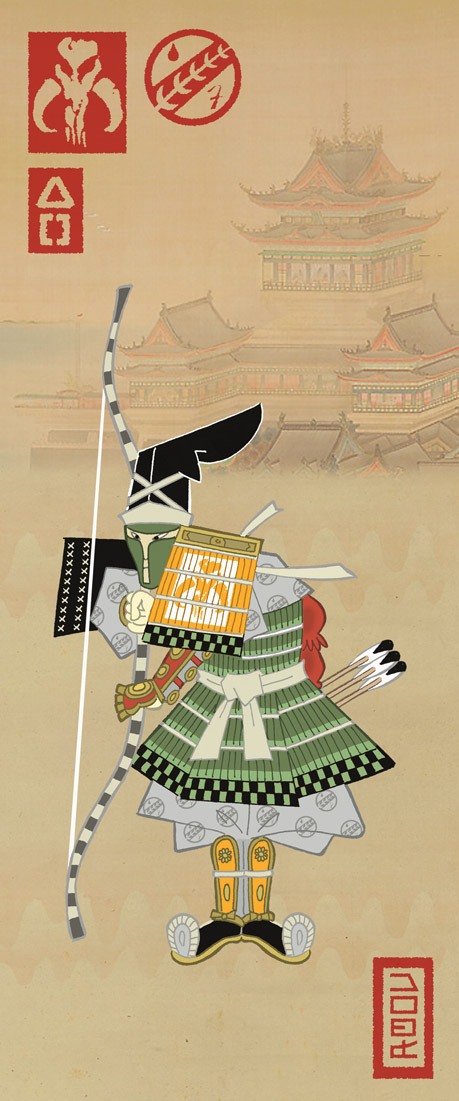
In a re-imagining akin to the Chris Felker art I posted a couple weeks ago, New York graphic artist Steve Bialik created a series of Ukiyo-e-style (浮世絵 “pictures of the floating world”) prints of Star Wars characters.
You can find more of Mr Bialik’s work at his blog STEVAPALOOZA!
More of this series under the fold. Read more of this post
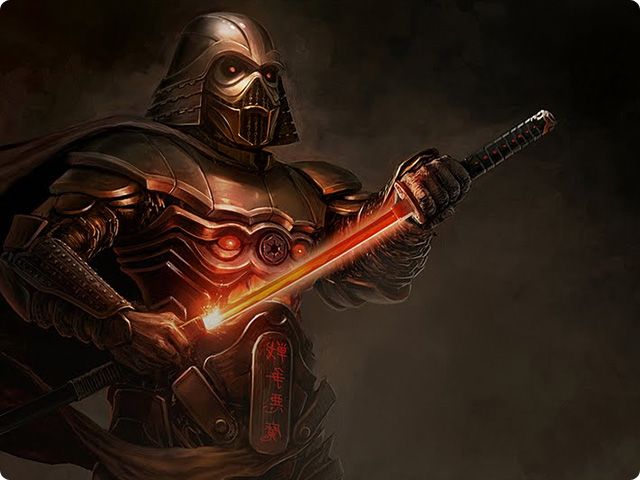
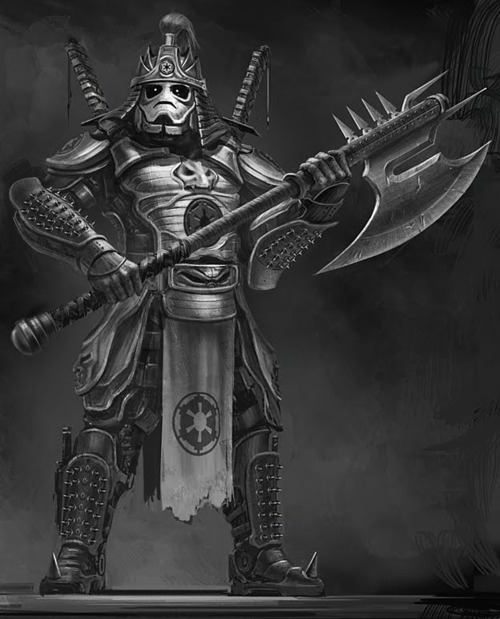
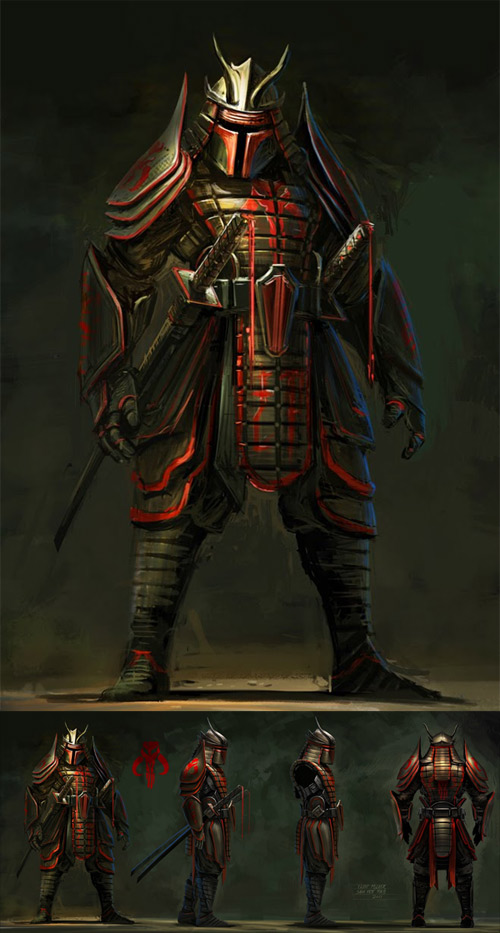
Clinton Felker over at The Hand that Feeds has re-imagined Star Wars characters in a retro/futuristic feudal Japanese style to excellent effect.
Mr Felker continues to create new art in this series (as of this writing) and sells larger prints at his website.
The legends surrounding Maneki Neko are many and varied. The bones of the old narratives appear placeable in history, but much that wraps them have their roots in Japanese folklore and tradition. (as well as occasional, simple, voracity)
The legend I prefer takes place during a dark and stormy night at a monastery near Edo, Japan (now Tokyo) in the year 1615.
Gotoku-ji temple was very poor. The monk had barely enough food for himself and a cat he had taken in, Tama, but he made do, tending the monastery and following his path as best he could.

After splitting a particularly meager meal, the monk said to Tama, “Your companionship means much to me, but I can not assure you a good meal. You should not starve with me, but find yourself a home worthy of your company.” The cat, of course, did not reply, but went to sit in a window of the temple as cats are wont to do.
Outside in the rain, Ii Naotaka, second son of Ii Naomasa, hereditary owner of Hikone Castle, was returning from the Battle of Tennōji. With the storm worsening, Ii Naotaka and his men took refuge beneath a tree. Looking around he saw the cat in the monastery window. It’s paw raised, the cat seemed to be beckoning the Daimyo to take shelter in the small temple. As he approached the monastery, lightening stabbed down and split the tree that he had just been standing beside. He surely would have been killed had he remained by the tree.
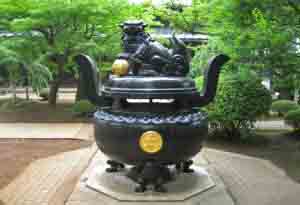
Welcomed in, Ii Naotaka found the old priest to be wise and kind and devoted to his path and his companion Tama. To repay the cat and priest for saving his life he became Gotoku-ji temple’s patron. When Tama died, the cat was given a place of honor in the temple cemetery, where many important members of the Ii family are also buried, and the first Maneki Neko statue was created in his memory.
Today, Gotoku-ji temple is still open for worship and attracts visitors from all over the world.
But the story of Maneki Neko is far from over. Read more of this post
I’m not usually a fan of rotoscope animation, but this is not your ordinary rotoscopy. It’s done in watercolor. This gives the video an interesting nuance and ‘mixability’ between the colors and gradients. The watercolor also adds an extra texture (and at times, angularity). The flow and transition of the animation draws you along as well.
Irina Dakeva (of french-based wizz design) animated and directed this music video for Breakbot‘s “Baby I’m Yours“.
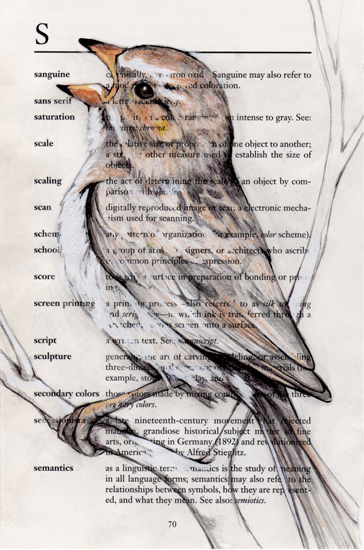
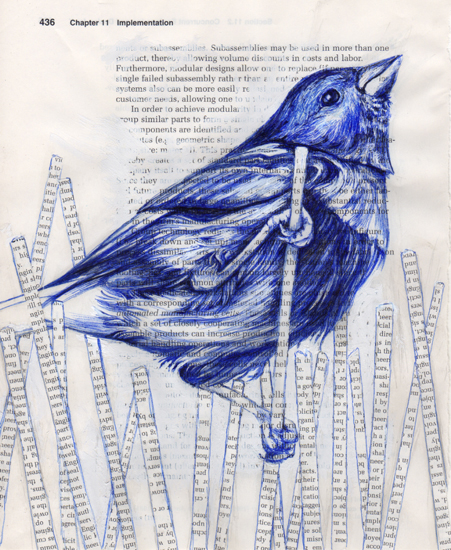
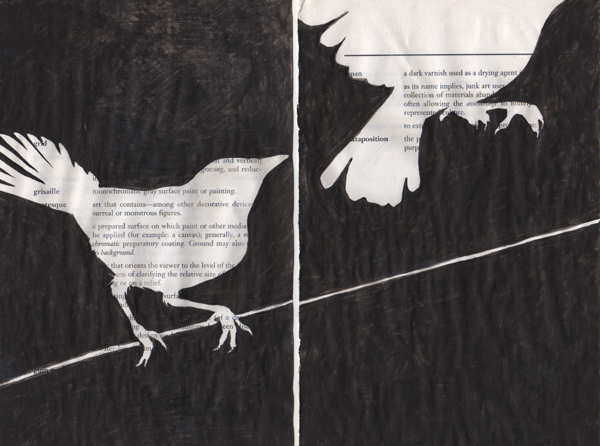
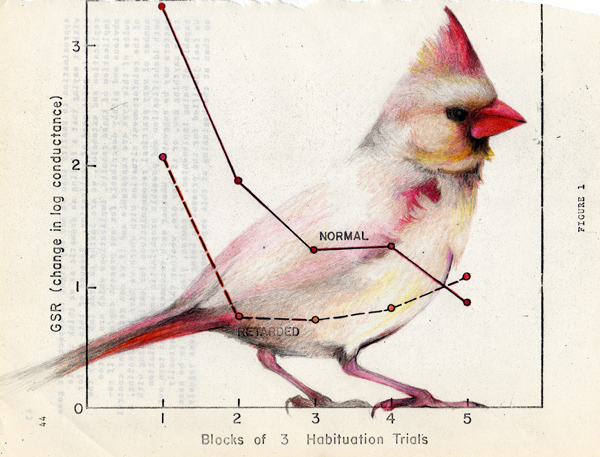
Birds on Paper is a series of drawings by Paula Swisher. While the title is technically correct, the ‘Paper’ part doesn’t fully describe the medium. The paper is the pages of textbooks, preferably ones with graphs.
We’ve all doodled in the margins, maybe even “enhanced” a picture, but Ms Swisher’s work takes it up a notch.
Reminiscent of natural history text illustrations, it feels appropriate, especially as the figure often takes cues from the page it’s drawn upon.
Paula Swisher is currently a professor of Communication Design at Kutztown University […] She enjoys straddling the two worlds of the creative and the technical. The hand-drawn mark, grid-based design, and info graphics are all things that keep her excited.
via paulaswisher.com
She has a few different collections and collaborations up at her website, but Birds is my favorite.
More of Paula Swisher’s work at paulaswisher.com
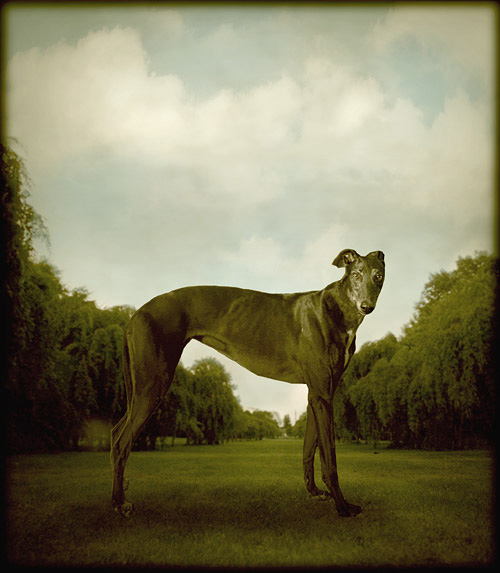
There are many a photographer’s nightmare and horrific pictorial evidence that describe the Family Portrait. It’s unfortunate that even the animals that share our life and home are not spared the indignity.
This ongoing project not only draws on my technical knowledge, but also on my childhood influences. Painters such as George Stubbs and John James Audubon impacted my work in a big way. These historic influences are offset by my modern day means of fabrication. These photographic portraits are mostly done on location with minimal post production work afterwards. I want to challenge beliefs of what we think of as historical or authentic, whether it was made yesterday or hundreds of years ago. To blur the lines of time and to engage the viewer in how we interpret history itself.
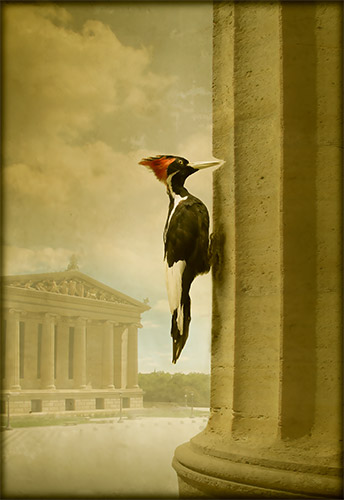
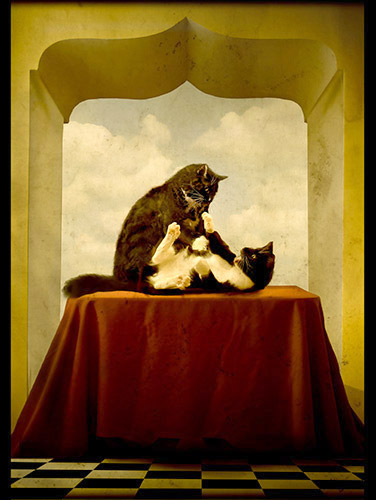
His portraits evoke the rich, dusty stillness found in old photographs and turn-of-the-last-century textbook illustrations. This isn’t simply antique tinting the picture, by any stretch.
While there is certainly some color work done to mimic film chromatics of a time and the aging since, Mr Pinkham also pays close attention to the setting, lighting, and focus we instinctively recognize as from another era.
Deep-scene painted backdrops, perhaps the subject is lit just a little too brightly, perspective is just a tad off kilter. The details perfect an image out of time.
What is particularly compelling is his choice of subject in this recent series of portraits; animals.
He has given human-subjected photographs the same treatment to nice effect, but they just don’t quite have the other-time-ness the animal series does to my eye.
You can see more of this series at Andrew Pinkham Photography or visit Mr Pinkham’s blog for an excellent overview of his work.
(yes, that was a dog picture. an unusual occurrence, i know, but don’t let it throw you. here’s an extra cat, if that’ll help)
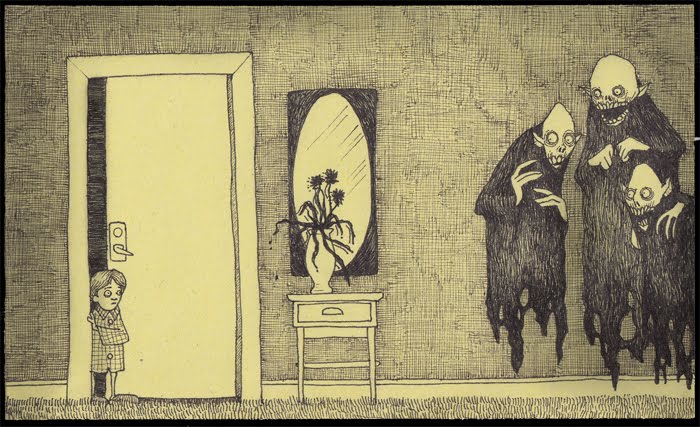
John Kenn is a Danish kid’s TV writer/director when he’s not parenting his own set of twins. In whatever spaces of time that are occasionally and accidentally left over he is also an artist of little panels of Gorey-esque macabre.
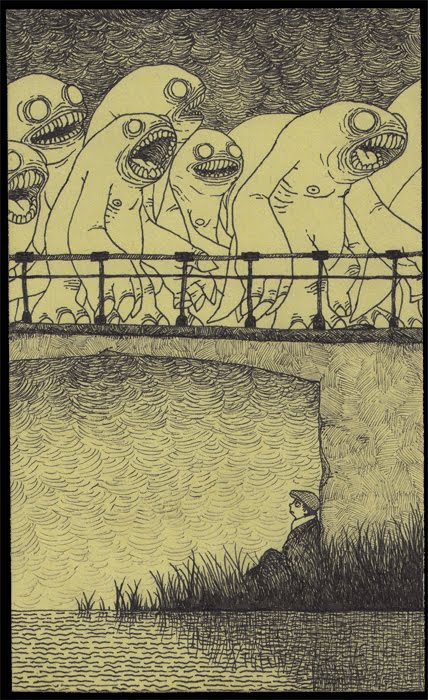
My favorite:

I wish this were me under the bridge. Unfortunately, many of life's monsters still end up finding me...
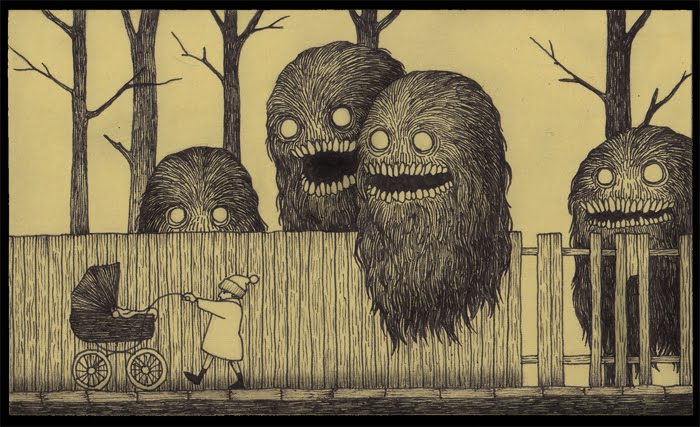
One of his latest:

This is certainly from the realm of fantasy - every parent knows that the monster is *inside* the pram
If the art itself isn’t cool enough for the heathens among you then I should probably mention that his canvas’ are Post-It Notes. Yep, office supplies…
Mr Kenn shares about a handful of drawings per month and his website has sketches going back almost three years. Make sure you have a good hour or more when you visit for the first time, you’ll want to get through the whole gallery…
In 2001 Animusic, founded by Wayne Lytle, released it’s first compilation DVD. This was a refinement of the work we saw in More Bells and Whistles. What Mr Lytle had done was flip animation on it’s head by creating computer models then using music input (MIDI) to control them. Basically, he made the instruments and the music played them.
More Bells and Whistles from the early computer animation video Imaginaria. Created in 1990, the animation was one of Wayne Lytle‘s first CG music videos. Look familiar?