Imagination was given to man to compensate him for what he is not, and a sense of humor was provided to console him for what he is. - Oscar Wilde
![]()
Top Posts
Recent Posts
Favorite Animators
Categories
Archives
Join 137 other subscribers
Animation, Art, and Other Shiny Things
I’ll leave it for you to decide…
When first I saw these pictures I was terrified. Feline armor could tilt that delicate balance of power between us and cats from our mere subjugation to broken cat toys.
Brutal, strutting intimidation. Vicious, helmet-resonating growls. Simply weaving in between our feet adds serious risk and danger. Jumping into our lap could knock us unconscious.
And the Machiavellian nature of Felis Cattus, especially the armored one, will certainly exploit these possibilities to the extent they don’t inhibit their feeding schedule. And get the litterbox while you’re at it too… Read more of this post
I grew up around books. Lots of books. I began to read them at 3, or so I’m told. I don’t remember a time when I didn’t read nor do I know how many books I’ve read, but I’d bet that number is somewhere on the upside of the average.
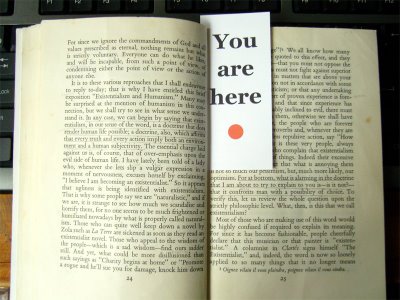
And because of this I’ve always had bookmarks too. In my mind, dog-earing a page corner is akin to writing in the margins – a cardinal sin, but occasionally necessary, and only then if the book’s condition or value allows it.
Nearly every bookstore supplies their own bookmark, as do most libraries, civic activities and organizations, museums and aquaria, parks and playhouses. If you need a ‘real’ bookmark, something created for the task, they’re easy to find.
We all have certain favorite bookmarks that we struggle not to lose, but in a pinch any slip of paper will do. Or a leaf, a feather, a piece of string, a gum wrapper, a picture, a dollar bill, a magazine response card, a random business card, or possibly even a ticket stub to a museum in Italy.
And they aren’t just slips of paper, either – formed brass, punched tin, stamped leather, wood laminate, shaved bark, reflective plastic, magnifying plastics, light lace, pattern-woven linen, crushed reed – just about any material that is cohesive, and won’t get absorbed by the book’s paper can or has been used to note a spot in someone’s book.
“The choice of a bookmark is a matter of personal taste and civilization, show me your bookmark and I will tell you who you are.”
George Hartong
[part 1 – the why] [part 2 – the software][part 4 – the build][part 5 – epilogue]
Part 3: The Hardware
After spending the last couple weeks working with the various software I’ll be using on my HTPC (Home Theater PC) I’ve come to the conclusion that there probably isn’t one overarching, integrated package that’ll do everything I want. That said, the WAF (Wife Acceptability Factor) should still be high if I set it up right. More on that when I get everything onto the 10-foot interface.
Perhaps even more important than the software will be the hardware. I could have the most sophisticated and beautious interface that catalogued everything and could even anticipate my next program choice (how did it know I wanted to watch Beach Babe Sumo Wrestling?), but if it stutters, buffers, and has poor quality video and audio then what’s the point?
Fortunately hardware capable of doing high end video is pretty much the norm these days and, as hardware has a tendancy to become, it’s cheap.
As noted in an earlier part to this series, I could go super cheap and get a netbook or the like, but I’ve decided to build my own. Having been a computer builder professionally and built all my systems for 20 years one would think that this was a no-brainer, however I really would’ve preferred to let someone else do the work as I’ve been out of the biz for a few years (an eon in computer time) and it is really kind of a pain in the butt.
Using 6 months of cable tv as a cost benchmark, around $750, let’s look at what we can cobble together.
[part 1 – the idea][part 3 – the hardware][part 4 – the build][part 5 – epilogue]
Part 2 – The Software
I’ve been evaluating the various software available to run my intended Home Theater PC (HTPC) for the last couple weeks on my current computer. It’s a gaming level machine so the video handling isn’t an issue, the main thing I wanted to know, however, was the useability of the various software packages and if they did what I wanted them to. My main criteria were:
[This is the first of a series on my move from cable tv to online content]
Part 1 – The Idea
I’ve had cable television longer than I’ve had cable internet, though not by a huge margin. There were a few years thrown in there that I had to choose between the two and went with the intertubes. I was playing alot of an online game, bringing home videos from the library, and watching what I could find on the internet. About exhausted PBS’s site during that time.
Well, it’s getting time to do that again, not because I have to make a choice again, but because I’m tired of paying for alot of stuff I don’t use. It’s not like I’m averse to the concept of getting what you pay for, I own a Cadillac for gawd’s sake, and I certainly am getting a decent enough deal from my local cable tv provider; hundreds of channels on twenty-four hours a day, premium movie channels, on-demand content, dvr. That’s alotta stuff.
Like a lot of folks, though, I come home, flop on the couch or in my computer chair (with a good view of the tv), and proceed to browse to find something even vaguely interesting to watch or let babble in the background while life goes on around it. There’s perhaps a handful of tv shows we like to tune into over the week, other shows that we’ll watch if we browse across them, and the occasional movie if it’s particularly good (or suitably bad, as our tastes go) or we’re just in the mood.
Lots of dvr’ed stuff goes unwatched. The on-demand content is marginal and smallish. I bet I only watch a dozen channels – tops.
I pay about 130 bucks for the privilege.
That’s going to change…
Hard boiled detectives aren’t only found in the pulps and, by necessity or chance, can be found on many a planet in the science fiction galaxy or fantasy universe. The uniform changes slightly from gumshoe to gumshoe, but the quick patter, ability to take a punch, and cynical streak of unbendable morality is consistent, even if it is hundreds of years in the future or hundreds of light-years into the beyond.
The first detective I met in the pages of a science fiction book was probably R. Daneel Olivaw in The Caves of Steel. He isn’t quite cut from the shamus twill of the paperbacks – he’s just a self-aware robot trying to help solve a crime amidst and despite anti-robot sentiments – but he introduced me to the idea that a SF detective novel could be written.
It’s been said that mystery and science fiction genres couldn’t be blended because you would naturally have situations or weapons that the reader had no reference to. The locked room mystery would be solved in 2 pages by the introduction of the Variable-Depth Instant-On Micro-Singularity Generator, for example. Pretty much the same for fantasy, though that would probably entail the old Triggered Heart Crush Spell of the Ancient Djooneormihntz. Anyways, they can be melded, and well. I’ve met many private eyes in my sci-fi reading career and here are a few of my favorites. Read more of this post
The perception of ancient China and Chinese art is inexorably entwined with the Ming dynasty. While Ming rule was only a fraction of Chinese history, in the western mind it’s been given free run in film and literature.
In the 13th century Kublai Khan let the Song dynasty know, rather rudely, that the Great Wall just wasn’t doing its job, which was, of course, to keep Mongols like himself out. Unfortunately for the Khan clan, this was about the same time as the Mongol empire was starting to fracture and, for a variety of reasons, was only able to rule China for less than 100 years until a Han peasant monk decided he’d had enough and led an overthrow and established the Ming dynasty.
A couple weeks ago I started a post draft on rhetoric intending to link the use of loaded words with the current political dialogue.
Well, I’m still working on it, but there’s been a spot of difficulty.
This weekend I made a push to complete a part of it for final posting. Last week I’d found the post running to a good three pages and the basic idea of the first two bore some more expansion. A couple pages of expansion later it turned out I had several different aspects of rhetoric and the human behavior it involved.
It is now 7 separate posts averaging a half page apiece with the primary draft down to a svelte pair of pages ripe for re-expansion…
Drifting off to sleep last night I considered why a simple exploration of spin shattered into so many pieces of thought. Granted, rhetoric is a discipline studied for thousands of years by the best minds human civilization could offer, but no one would count me among that number, nor do I have any formal training or education in logic or rhetoric. (not like that isn’t obvious…)
Perhaps it’s just how I write.