The Ruffled Crow

Animation, Art, and Other Shiny Things

The Mind’s Eye – Leaving the Bonds of Earth

Curling: The Art of Throwing Rocks

I’ve been a big fan of Curling for a long time. Even living relatively close to the Canadian border, not alot of Curling is shown on TV except during the Winter Olympics, and even then it’s often at odd times of the day or night. Now, I could moan and snark my way through a complaint or three, but the truth is that I’m actually quite fortunate and it’s my own damn fault for not getting my fill of the sport.

I live just over a mile from the only dedicated Curling rink on the west coast.

Granite Curling Club in Seattle

Granite Curling Club has been around since I was a kid (1961 per their website) and is housed in a rather nondescript building a block off Highway 99 in north Seattle. Bounded by a City Light storage yard and miscellaneous light industrial buildings you’d hardly know it was there were it not for the usually-packed parking lot.
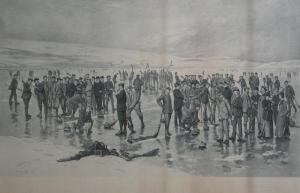
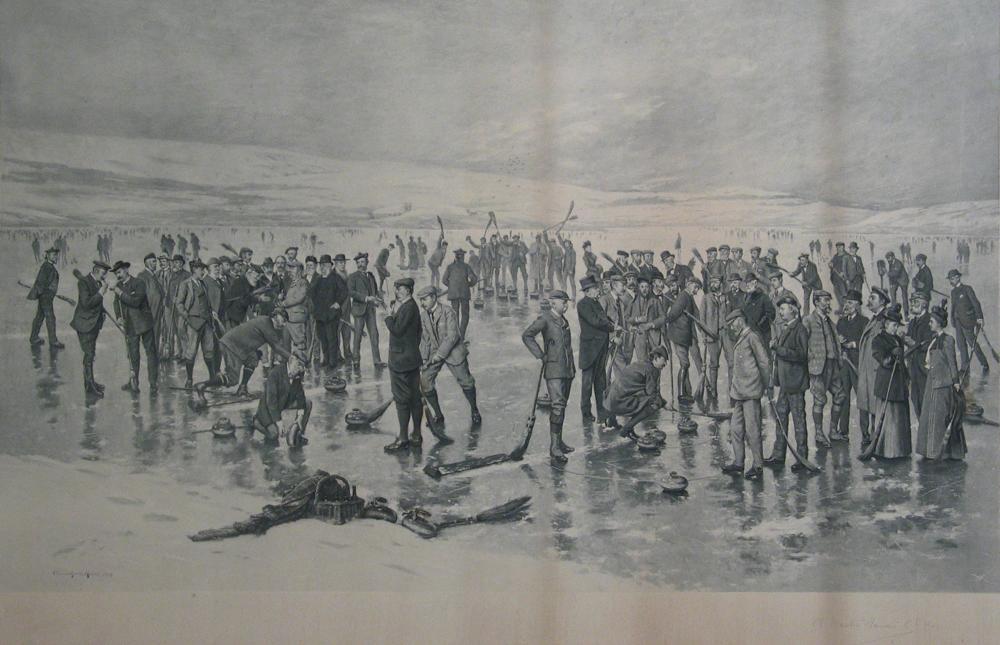
Not the Granite Curling Club in Seattle. (probably 19th century britain)

The rink has a tightly packed calendar during Curling season, which runs about October to March, and includes leagues and ‘Bonspiels’ (competitions between curling clubs) as well as private events and open-houses.

Aunt Bee and I have stopped by to watch a few spiels (huddling against a convenient surface; there’s a lot going on and we have yet to venture upstairs) and I keep toying with the idea of attending an open house. I’m not sure either them nor I are ready to put me on the ice, but eventually I’ll probably work up the courage to grab a broom and throw a rock.

Winter Landscape With a Bird Trap by Pieter Bruegel (1565)

The sport of Curling has been around since at least the 16th century, and leave it to the ‘whack-a-tiny-ball-with-a-stick-into-a-hole’ Scots to create a ‘push-a-rock-around-on-a-frozen-pond’ game. Often called “The Roaring Game” for the sound the rock makes passing over the pebbled ice, the name “Curling” comes from the word “Cur” or “to grumble”. (although there is a bit of dispute here with some claiming that the name comes from the ‘curl’; the movement of the rock at the end of a throw. i don’t think so, however, as in early games the rock sizes were highly variable and the thrower had control over little more than the ‘weight’ of the throw. but i digress…)
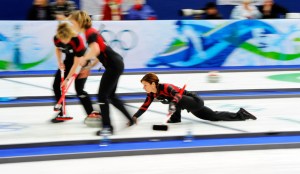
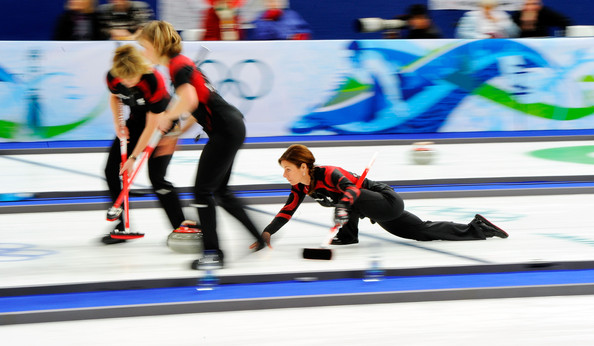
2010 Winter Olympics - Cheryl Barnard, Skip

Two teams, each of four players, take turns sliding heavy, polished granite stones, also called “rocks”, across the ice curling sheet towards the house, a circular target marked on the ice. Each team has eight stones. The purpose is to accumulate the highest score for a game; points are scored for the stones resting closest to the centre of the house at the conclusion of each end, which is completed when both teams have thrown all of their stones. A game may consist of ten or eight ends.

The curler can induce a curved path by causing the stone to slowly turn as it slides, and the path of the rock may be further influenced by two sweepers with brooms who accompany it as it slides down the sheet, using the brooms to alter the state of the ice in front of the stone. A great deal of strategy and teamwork goes into choosing the ideal path and placement of a stone for each situation

via

Yelling at the rock is an important part of a proper throw

To learn more about the game that literally rocks the house CurlingBasics.com is a great place to start. It’s heavy with Flash animations showing basic shots and strategies as well as rules and club links. To find ice and rink locations around the US check into Kansas City club’s Locator map. Their website’s worth a browse as well.

And if you can’t get enough Curling, you can always play online!

Be sure to check out my previous post on Curling. It includes a How It’s Made episode on Curling rocks!

Android 207

I first saw this video some years ago and seem to find interesting little nuances every time I watch it.

In this short stop-motion film by Paul Whittington a robot finds himself in a large labyrinth full of traps. In trying to find it’s way out it must face emotional and psychological challenges.

The Mind’s Eye – Love Found

Love can transcend the most formidable of barriers – and it can show off some impressive computing power for 1990. (note how many things are moving independently)

[Thanks to Craig Reynolds for the link to the original version! Stanley & Stella in Breaking the Ice]

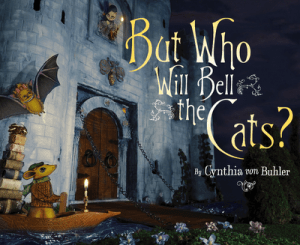
But Who Will Bell the Cats? – The Art of Cynthia von Buhler

Evelyn Evelyn: A Terrible Tale in Two Tomes

This is that post I mentioned in the Have You Seen My Sister Evelyn post, and Cynthia von Buhler is the artist that sent me down this rabbit hole.

Ms von Buhler not only drew the cover art for the Evelyn Evelyn album, but joined Mr Webley and Ms Palmer in creating a companion book to the disc that further details the lives of Eva and Lyn Neville:

Enthusiasts of genuine tragedy and celebrity intrigue, gird your mental loins for an authentic tale of unbelievable hardship and epic catastrophe! This wholly true and accurate account details the extraordinary lives of Evelyn and Evelyn, a darling but unfortunate pair of conjoined twins who brave extreme circumstances of calamity and adversity

via

…and while poking about on the intertubes to learn more about the Evelyn Evelyn album I went through a side door somewhere and ended up at one of those pages that is art. (and i don’t assign that lightly. at least i hope not… the word really deserves a completely different font as well, but you have to work with what you have)

butwhowillbellthecats.comIt is digital magic when an artist’s work and the internets come together to make more than the sum of each (remember retropolis?) and But Who Will Bell The Cats is a terrific example. Another of Ms von Buhler’s sites, The Cat Who Wouldn’t Come Inside, is also a work of art.

The Cat Who Wouldn't Come Inside

The Cat Who Wouldn't Come Inside

Ms von Buhler has illustrated several children’s books, but The Cat Who Wouldn’t Come Inside and But Who Will Bell the Cats? are the only two with their own websites. (though you can get a look inside any of the books in the library) BWWBTC is her latest and looks to be the first Ms von Buhler has also written.

Cynthia von Buhler is an internationally exhibiting visual artist, illustrator, children’s book author, and performer living in New York City. Von Buhler uses traditional as well as unconventional media: painting, sculpture, performance, video projection, installation, living fauna, collage, photography, human detritus, and electronic audio. By innovatively combining these media, often enhanced with text and electronics, von Buhler’s canvasses frequently become elaborate kinetic installations. In March 2006, Art & Antiques named von Buhler “one of the top contemporary surrealists”, however she has also been linked to the Fluxus movement.

via

The sculptures she creates for these two books are rich and warm and invite you to poke around looking for the little details and surprises. (the reason the books are so popular with kids, no doubt. the library got a dozen copies or so of both books a few weeks ago. got several of evelyn evelyn too, for that matter. but i digress…)

The same attention is given to her websites as well and is what puts them on my ‘best of’ list. Ms von Buhler’s primary site is at cynthiavonbuhler.com and her blog, or rather, one of her blogs is at cynthiavonbuhler.blogspot.com. Both are incredibly packed pieces of imaginary real estate and, much like her books, are great places to poke around in – you’ll never know what you’ll see next or where you’ll end up. Just trying to find the way back to something often has me finding something new. They are also fairly well linked together, so you can pretty much start on any one of Ms von Buhler’s sites and find yourself on her bio page as easily as on the ‘Find the Mouse‘ card trick page. I heartily endorse the ‘click everything’ method of site exploration.

The Curious Fate of Humankind

The Mind’s Eye – Post Modern

The End

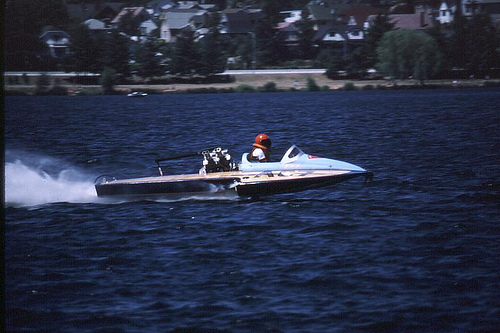
Thunder on the Lake – Seattle Hydroplane Racing

Around our house the first weekend in August is our All-Star weekend, the annual game seven of our World Series. On Sunday, no plans are made, the big screen is turned on and turned up and only one program is on. The Hydros.

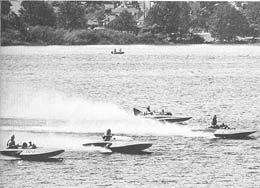
UL-Class Racing on Green Lake ca 1975

These were the monster trucks and sports heroes of my childhood. With a bit of board, maybe a few nails, and a yard or two of twine we had a Thunderboat trailing behind our bike. Spike nails on the back edge and we had a roostertail made of sparks.

Growing up in the north end of Seattle I could hear the growl of the engines from Green Lake, three miles away. Often-times friends and I would walk down to the lake to watch, or we’d cage a ride from one of our parents.

Green Lake is a natural race course; roundish, Duck Island in the middle, and ringed by nice open areas to spread your blanket and watch the rooster-tails go by.

On July 20, 1929, at a time when water sports are becoming the fastest growing sport in the country, the hydroplane craze hits Green Lake. For the next half century, hydroplanes hurl their roostertails around the lake.

via

The Green Lake area has always been a nightmare to drive around, and it’s a considerably deeper level of hell if you want to actually park.

Unfortunately, that attendant traffic, parking, and noise, didn’t sit well with the Green Lake neighborhood folks and with the death of a baby Snow Leopard at nearby Woodland Park Zoo attributed to the engine noise, the hydroplanes were banned from the lake in 1984.

But the big boats, the U-boats, they were on Lake Washington.

Read more of this post

The Mind’s Eye – Technodance